Since 2009, we have been utilizing our extensive expertise in blockchain technologies to help businesses, both large and small, maximize their efficiency.
Explore More
With more than 400+ experts, Oodles comprises a fantastic resource of business knowledge that spans multiple industries. Whatever the circumstances, we keep to our obligations.
Explore More
At Oodles, we help our clients work with a human understanding but at superhuman speed something that others can't. They thus advance and maintain their lead
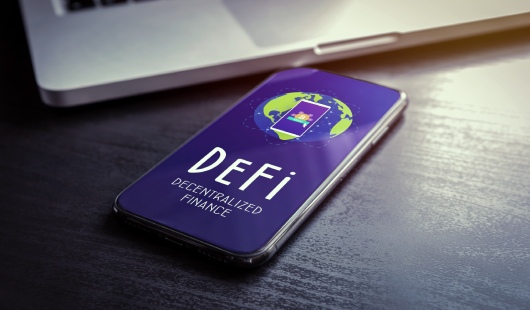
DeFi, which stands for Decentralized Finance, has revolutionized the financial industry using blockchain technology. However, due to their high energy consumption, some consensus mechanisms used in DeFi have raised concerns about their environmental impact. So, to ensure DeFi's sustainability, it is important to evaluate the consensus protocols used by various blockchain projects.
Many blockchain projects prioritize energy efficiency and environmental sustainability to address this issue. One such project is Terra, which is a decentralized stablecoin platform.
Terra is a platform built on the Tendermint consensus protocol. It uses a Proof of Stake (PoS) consensus mechanism, which is more energy-efficient than other mechanisms, to reduce its carbon footprint. The platform's main focus is to provide stablecoin solutions that promote global financial inclusion while considering the environmental impact.
Also, Read | DeFi in Real Estate | Exploring New Horizons and Potentials
Most popular blockchain networks like Bitcoin and Litecoin use Proof of Work (PoW) as their consensus mechanism. However, PoW is infamous for its high energy consumption. The mining process requires solving complex mathematical puzzles and consuming significant electricity using substantial computational power. It has led to criticism of PoW due to its environmental impact. It includes carbon emissions and reliance on energy-intensive mining operations.
PoS, a powerful alternative to PoW, directly addresses the environmental concerns associated with the latter. By selecting block validators based on the number of cryptocurrency tokens they hold and are willing to 'stake' as collateral, PoS eliminates the need for energy-intensive mining, leading to a significant reduction in carbon footprint. This energy-efficient and scalable approach is gaining traction, particularly among environmentally conscious DeFi platforms.
Ethereum, one of the largest blockchain networks, upgraded to Ethereum 2.0 and transitioned from Proof-of-Work (PoW) to Proof-of-Stake (PoS). This transition is not just a change but a significant step towards reducing the network's energy consumption and improving scalability. It's a reassurance that the future of sustainable DeFi is within our reach.
You may also like | DeFi Trends for 2024 and Beyond | Insights and Projections
The shift from Proof of Work (PoW) to Proof of Stake (PoS) can profoundly impact the environment. By transitioning to PoS, DeFi protocols can reduce their energy consumption and carbon emissions, making them more sustainable and environmentally friendly. However, it is essential to consider other factors, such as the overall energy mix used for electricity generation, to assess DeFi platforms' environmental impact accurately.
Avalanche is a blockchain platform that uses a variation of the PoS consensus mechanism called Avalanche consensus. It aims to provide high throughput, low latency, and energy efficiency. By leveraging PoS, Avalanche reduces the energy consumption required to secure the network while maintaining decentralization and security. This approach contributes to a more sustainable and environmentally friendly blockchain ecosystem.
Also, Read | Avalanche Blockchain Development | Built for dApps and DeFi
Several initiatives are emerging to integrate environmental, social, and governance (ESG) principles into DeFi protocols. These initiatives focus on transparency, carbon neutrality, and community engagement to foster a more sustainable and socially responsible financial ecosystem.
One intriguing example of a sustainable finance initiative that emphasizes transparency is the Open Green Finance Platform. This innovative platform, launched in 2021, leverages blockchain technology to provide transparent and auditable information on the environmental impact of financial activities.
The concept of carbon neutrality in DeFi has gained traction with the emergence of projects like CarbonSwap. CarbonSwap is a decentralized exchange (DEX) that focuses on offsetting carbon emissions generated by blockchain transactions. Investing in verified carbon offset projects enables users to trade and provide liquidity while ensuring a net-zero carbon footprint.
Sustainable finance initiatives within the blockchain industry often emphasize community engagement. One empowering example is the Giveth platform, which integrates blockchain technology into charitable donations. By providing individuals and organizations with the means to support and track the impact of their donations directly, Giveth inspires a more inclusive and engaged approach to sustainable finance.
Also, Check | Liquidity Mining | Exploring its Potential in the DeFi World
The future of DeFi is bright, offering exciting possibilities for a more inclusive and efficient financial system. However, to ensure long-term success, prioritizing sustainability is crucial. By transitioning from energy-intensive Proof-of-Work (PoW) to eco-friendly Proof-of-Stake (PoS) consensus mechanisms, DeFi platforms can significantly reduce their environmental impact.
Ready to build a sustainable and impactful DeFi solution? Our team of skilled blockchain developers offers comprehensive DeFi expertise. We'll help you leverage DeFi's power while keeping sustainability at the forefront. Contact us today to discuss your project and explore how we can build a greener future together!
Siddharth Khurana is a skilled DeFi developer and Web3 consultant at Oodles with nearly 4 years of experience in blockchain technology. He specializes in Solidity, Rust, and Node.js, focusing on decentralized applications, secure smart contracts, and scalable server-side solutions. Siddharth has contributed to projects like Huma, Smokin Token, HODLToken, and Wethio Exchange, delivering innovative DeFi solutions in decentralized exchanges, cryptocurrency development, STOs, and yield farming.
Experienced content professional currently working as an Assistant Consultant at Oodles Technologies, where I create long-form SEO blogs, web content, custom widgets, FAQs, video scripts, newsletters, and social media posts with clarity and impact. Previously, I worked at GlobalLogic as a Content Research Analyst. Passionate about impactful writing, SEO, and continuous learning, I also find comfort in poetry and self-help books outside of work
By using this site, you allow our use of cookies. For more information on the cookies we use and how to delete or block them, please read our cookie notice.
We would love to
hear from you!
Innovate with confidence!