14th November 2025
11 min read
At Oodles Blockchain, we know that blockchain technology is much more than just a cutting-edge trend; it's a business tool with the power to drive real transformation. Companies today are using blockchain to increase efficiency, cut costs, improve data integrity, and open new revenue streams. However, despite its advantages, businesses often struggle to measure blockchain's true impact on their bottom line. This is especially true when the benefits of blockchain, like trust, transparency, and security, aren't always immediately measurable.
This comprehensive guide will break down how Oodles Blockchain helps businesses track and measure the return on investment (ROI) from blockchain. We will explore real-world use cases, the key metrics to track, best practices for maximizing blockchain ROI, and how to avoid common pitfalls in the measurement process. By following this guide, your business will be well-equipped to make blockchain work for you, ensuring measurable success.
Before diving into how to measure blockchain ROI, let's first take a closer look at the core reasons why businesses are investing in blockchain technology and why tracking ROI is important.
Also Read | Different types of Blockchain and their uses.
For businesses to capitalize on these advantages, measuring blockchain's direct impact on ROI is crucial.
Implementing blockchain is not a plug-and-play solution, it involves complex integration and changes in business processes. As a result, companies face several challenges when measuring the ROI of blockchain technology:
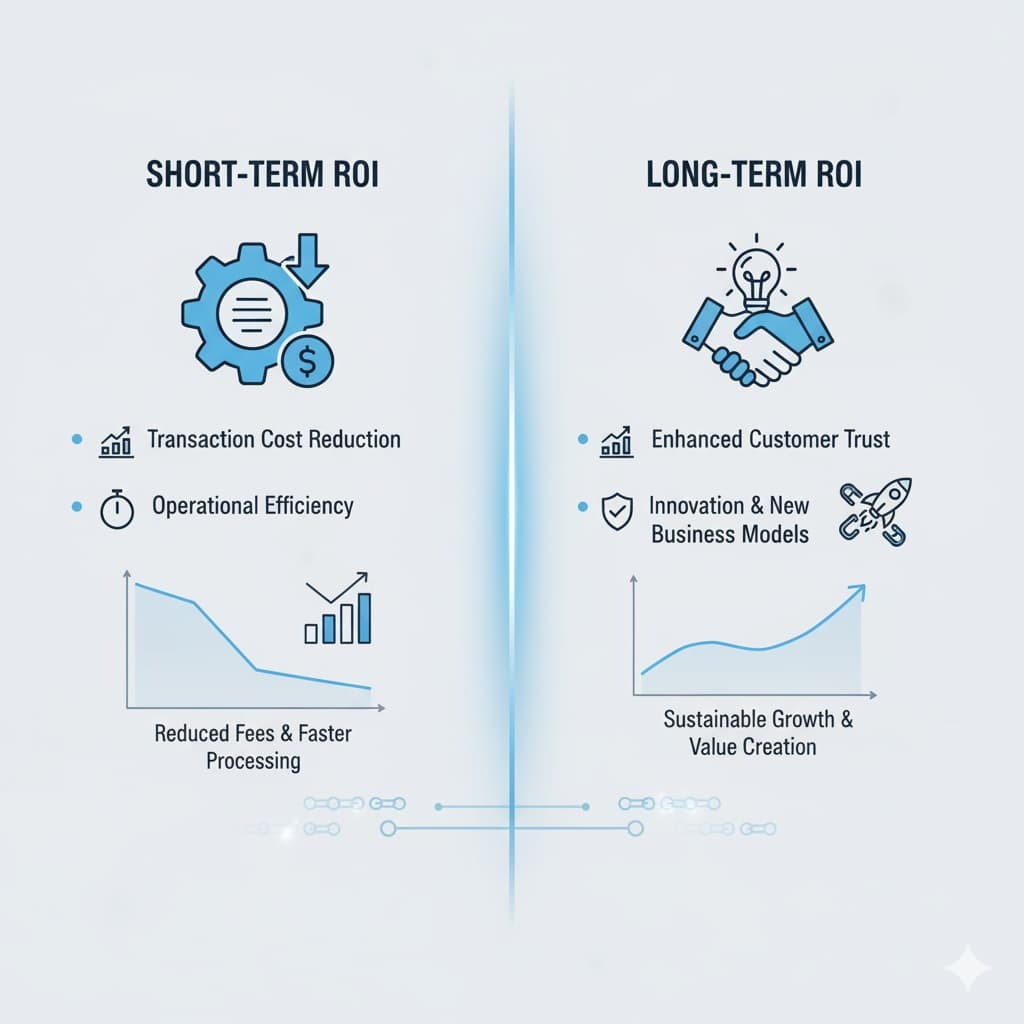
Blockchain's most immediate ROI often comes from transaction cost reduction, operational efficiency, and improved security. However, the more profound benefits, such as new business models (e.g., DeFi, NFTs) and increased customer trust, tend to take longer to materialize.
Blockchain is not a standalone solution. It needs to be integrated with your existing systems, whether that's ERP, CRM, or financial systems. This integration often requires significant upfront investment in terms of time, resources, and expertise, which can delay the realization of ROI.
Blockchain's ability to increase customer trust, improve transparency, and reduce fraud may not show up immediately in financial statements, but these intangible benefits play a crucial role in long-term business success.
Blockchain technology is often seen as a quick fix that will instantly improve business processes. However, it requires strategic planning and careful implementation to deliver tangible ROI.
Also Read | Layer 3 Blockchain Development
Once you've set clear goals for implementing blockchain, it's time to measure its effectiveness. Here are the top five key metrics businesses should track to measure blockchain's ROI:
Blockchain offers one of the most immediate benefits: reduced transaction costs. By eliminating intermediaries, such as banks, payment processors, and clearinghouses, businesses can significantly lower their transaction fees.
How to Measure:
Real-World Example:
A global remittance company adopted blockchain for international transfers and reduced fees by 65%. This helped the company remain competitive in the market, increase profitability, and attract more customers.
Blockchain can increase operational efficiency by automating manual processes and reducing bottlenecks. The use of smart contracts, for instance, allows for automated execution of transactions once certain conditions are met, thus improving workflow speed and accuracy.
How to Measure:
Real-World Example:
A logistics company using blockchain to manage its supply chain processes saw a 50% reduction in processing time, leading to faster deliveries and reduced operational costs.
Blockchain's immutable ledger ensures that data cannot be tampered with, reducing the risks of fraud, errors, and compliance violations. This is especially valuable in industries where accuracy and transparency are critical, such as finance and healthcare.
How to Measure:
Real-World Example:
A financial institution implementing blockchain for transaction validation reported a 30% reduction in fraud and 40% savings on compliance costs due to blockchain's tamper-proof ledger.
Blockchain's transparency and security are key drivers of customer trust. When customers know their data is secure and transactions are transparent, they're more likely to stay loyal to your brand.
How to Measure:
Real-World Example:
A retail company implemented blockchain to trace the origin of products, offering customers greater transparency about product sourcing. This resulted in a 20% increase in customer retention and positive customer feedback about the company's commitment to transparency.
Blockchain is a powerful tool for business model innovation. Through tokenization, DeFi (Decentralized Finance), and NFTs (Non-Fungible Tokens), businesses can explore new revenue streams and expand into previously untapped markets.
How to Measure:
Real-World Example:
A real estate company began tokenizing property shares on the blockchain, allowing for fractional ownership of real estate assets. This new revenue model led to a 25% increase in revenue, attracting a broader audience of investors.
Also Read | What is Blockchain Technology and how does it work ?
To ensure you get the most value from blockchain, consider the following best practices:
Rather than implementing blockchain across your entire business, start with high-impact use cases that offer clear, measurable ROI. Once you've demonstrated success in one area (e.g., payments or supply chain management), you can expand to other areas.
Blockchain should align with your long-term business goals. Whether you aim to reduce costs, improve customer experience, or explore new business models, ensure that blockchain is part of a broader strategic plan.
Blockchain is not a "set it and forget it" solution. You need to continuously monitor performance, adjust strategies, and optimize processes as you go. Regularly assess both short-term and long-term ROI to ensure that blockchain is delivering the expected results.
Blockchain is a complex technology, and its implementation can be tricky. Work with experienced blockchain developers who understand both the technology and your business needs. They can help you navigate the complexities of blockchain and ensure a smooth integration with your existing systems.
Blockchain technology is evolving rapidly. Be open to new opportunities that blockchain can provide, such as DeFi, NFTs, and cross-chain solutions. Staying agile allows you to adapt to changing market conditions and emerging trends.
At Oodles Blockchain, we believe blockchain can transform your business, but measuring its true impact requires careful planning, clear metrics, and continuous optimization. By focusing on the right KPIs, such as transaction cost reduction, operational efficiency, customer trust, and new revenue streams, you can unlock the full potential of blockchain and achieve substantial ROI.
Ready to explore how blockchain can help your business grow and improve your bottom line? Contact Oodles Blockchain today to start your blockchain journey. Our team of experts will guide you through the process, from pilot projects to full-scale implementation, ensuring that blockchain delivers measurable value and sustainable business growth.
The timeline depends on your use case and the scale of deployment. For efficiency-focused projects - like automating transactions or improving supply chain traceability - ROI can be seen within 6-12 months. However, for projects tied to new business models (like DeFi platforms or asset tokenization), measurable ROI often appears after 18-24 months due to longer adoption cycles.
Industries with heavy reliance on data accuracy and intermediaries tend to see faster ROI. These include finance, logistics, healthcare, and supply chain management, where blockchain directly cuts operational costs, reduces fraud, and improves transparency.
Blockchain is scalable. SMBs can leverage permissioned blockchains or blockchain-as-a-service (BaaS) solutions to deploy cost-effective, smaller-scale projects. Starting with targeted use cases - like digital payments or document verification"”can help SMBs realize ROI without major capital investment.
Initial costs vary based on project complexity, infrastructure, and customization needs. Typically, expenses include blockchain network setup, smart contract development, integration with existing systems, and developer expertise. Starting with pilot projects helps minimize initial costs and validate ROI before full-scale rollout.
Yes. Modern blockchain solutions can integrate with ERP, CRM, and other enterprise software via APIs and middleware. However, seamless integration requires technical planning to ensure data consistency and interoperability across platforms.
Compliance depends on your jurisdiction and the nature of the data being stored. Working with experienced blockchain developers and legal consultants ensures compliance with GDPR, KYC/AML, and other industry-specific regulations. Private or permissioned blockchains are often used when stricter data control is required.
Most businesses only measure short-term cost savings and ignore long-term strategic gains like customer loyalty, improved brand trust, and new revenue models. A complete ROI assessment must include both tangible and intangible metrics to capture blockchain's full impact